info@tiatranslator.com

Translation vs Interpretation: What’s the Difference and Which One Do You Need?
When dealing with multilingual communication, many people use translation and interpretation interchangeably. In reality, they are two distinct services with different purposes, skill sets, and use cases. Understanding the difference between translation vs interpretation is essential—especially for businesses, institutions, and individuals who rely on accuracy, clarity, and professionalism.
Cynthia Chadwick
2/16/20262 min read


What Is Translation?
Translation refers to converting written text from one language into another while preserving the original meaning, intent, and accuracy.
Key characteristics of translation:
Involves written documents
Focuses on accuracy, terminology, and consistency
Allows time for research, review, and quality control
Often requires subject-matter expertise
Common translation use cases:
Legal contracts and agreements
Medical reports and records
Academic transcripts and certificates
Business documents and reports
Marketing and website content
Because translated documents are often reviewed by authorities, courts, or institutions, precision is critical.
What Is Interpretation?
Interpretation is the conversion of spoken language from one language to another in real time or near real time.
Key characteristics of interpretation:
Involves spoken communication
Requires fast thinking and strong listening skills
Focuses on conveying meaning, tone, and intent instantly
Minimal time for correction or revision
Common interpretation use cases:
Business meetings
Conferences and seminars
Court hearings
Medical consultations
Diplomatic or government events
Interpreters must process information quickly and deliver it clearly—often under pressure.
Types of Interpretation
1. Simultaneous Interpretation
Interpreter speaks while the speaker is talking
Common in conferences and large events
Often uses headsets and soundproof booths
2. Consecutive Interpretation
Speaker pauses to allow interpretation
Common in meetings, interviews, and legal settings
3. Whispered Interpretation (Chuchotage)
Interpreter whispers to one or two listeners
Used in small meetings or courtrooms
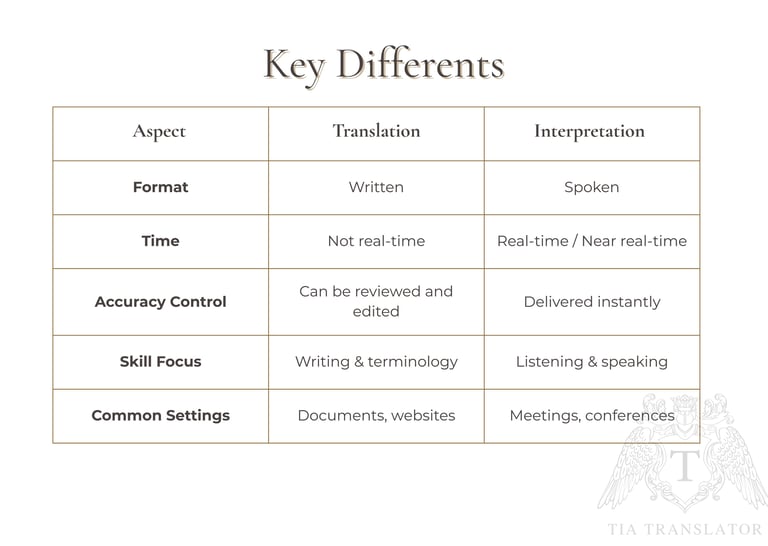
Translation vs Interpretation: Key Differences
Why Choosing the Right Service Matters
Using the wrong service can lead to:
Miscommunication
Legal or compliance issues
Delays and misunderstandings
Loss of credibility
For example:
A legal contract requires translation, not interpretation.
A business negotiation requires interpretation, not translation.
Choosing the correct service ensures clarity, professionalism, and trust.
Do You Ever Need Both?
Yes. Many situations require both translation and interpretation.
For example:
A business meeting with an interpreter, followed by translated contracts
A medical consultation with interpretation, followed by translated reports
A conference with live interpretation and translated presentation materials
Professional language providers can coordinate both services seamlessly.
Professional Support Makes the Difference
Qualified translators and interpreters are trained differently, certified differently, and assessed differently. Professional services ensure:
Confidentiality
Subject-matter expertise
Cultural sensitivity
Reliable quality standards
At Tia Translator, we provide professional translation and interpretation services tailored to your industry, language pair, and communication needs—so nothing gets lost in translation or interpretation.
Final Thoughts
Translation helps people read and understand written content.
Interpretation helps people communicate across languages in real time.
Knowing the difference allows you to choose the right service, avoid costly mistakes, and communicate confidently across borders.
📩 Need professional translation or interpretation?
Contact Tia Translator today and let us help you communicate clearly—no matter the language or setting.